
Gatik Omni
Native mobile app to empower field associates to track and interact with autonomous trucks

Role
Lead product designer
Timeline
2024 -Present
Ownership
Feature complete
Design system
User research
Team
Lead product designer
Releases
v1.0, 1.2, v2.0
Ownership
Feature complete
Design system
User research
In large logistics yards and distribution hubs, operational efficiency hinges on seamless coordination between frontline associates — loaders, unloaders, guard shack attendants, yard spotters, and assistant drivers.
However, much of their daily workflow still depends on radio calls, paper logs, and verbal confirmations that cause bottlenecks, missed updates, and unsafe overlaps between manual and autonomous operations.
PRODUCT IMPACT
80% increase operational efficiency
On-time deliveries, team coordination, Less dwell time, improved team coordination.
60 % efficiency boost of SLA tasks
Avg. compared to the other tools customers used.
Increased communication for immediate stakeholders
More alignment between loaders, dispatchers, unloaders, warehouse associates
Increased brand trust at field level
Customer field associates reported feeling their opinions matters during testing and on-site training sessions
PROBLEM AT HAND
After a continuous rounds of synthesis with the cross-functionals we decided on my suggestion to put users in ecosystems and archetypes to simplify and better address the users' needs mainly to address:
Replace fragmented radio communication with real-time task visibility.
Reduce the cognitive load for field associates working under time pressure.
Maintain hands-free accessibility and safety compliance in noisy, high-traffic environments.
Connect human associates seamlessly with autonomous fleet systems and dispatchers.
Field associates typically have limited digital training and work under varying conditions — from bright outdoor lots to low-light guard booths — meaning the app had to be frictionless, resilient, and inclusive across all contexts.


APPROACH TO DESIGN


OUTCOMES & LEARNING
Beyond metrics, the project reframed how the organization viewed design’s role in industrial efficiency — from interface polish to operational systems design. This project also created the need for a design system
Omni Field iOS became a proof-point that design maturity and field empathy can coexist with high-throughput operations.
For me, this project reinforced that Staff-level design is not about pixel-perfection — it’s about orchestrating clarity across people, machines, and contexts.
By translating real-world motion into actionable digital cues, we helped transform frontline labor into a connected, data-driven network of collaborators.
Solving the interaction problem of tracking and autonomous
Providing the users with an intuitive app where they an use it as a companion and a key to track, monitor and interact with autonomous trucks.
Intuituive track and trace for all users. Empowering decision making
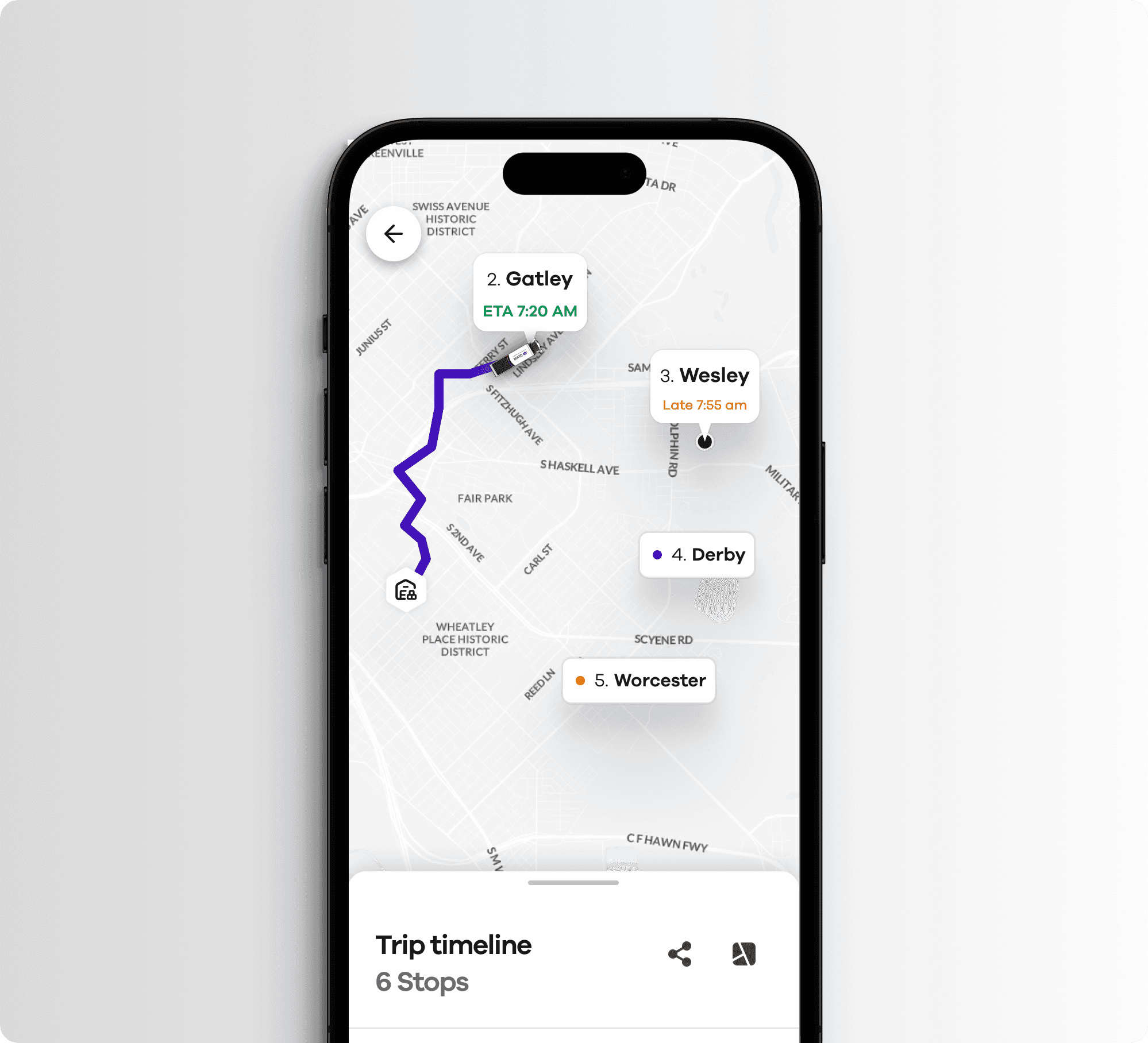
Users easily monitor autonomous trucks trips as it passes through delivery stops while knowing how on-tine, early or late the truck has been at each delivery stop.

Solving the problem of on-time alignment and delivery between users
Users have real-time notification with the ability to discuss last minute or unforeseen changes related to those events in the same place.
User flexibility and scalability for future use cases
Features like the key is designed to be able to scale to different users roles with more access to the system such as managers who choose to use the app.


Interaction design as part of the solution
Giving users the good aesthetics when possible in tedious steps.
Designing systems based on states deriven from user journeys
Enabling users to unblock the system by giving the ability to assign themselves to new locations based on their predefined roles.
